And a fiery crimson coneflower
Showing posts with label daylilies. Show all posts
Thursday, July 16, 2015
Saturday, July 26, 2014
Dick's Flowers, 2014
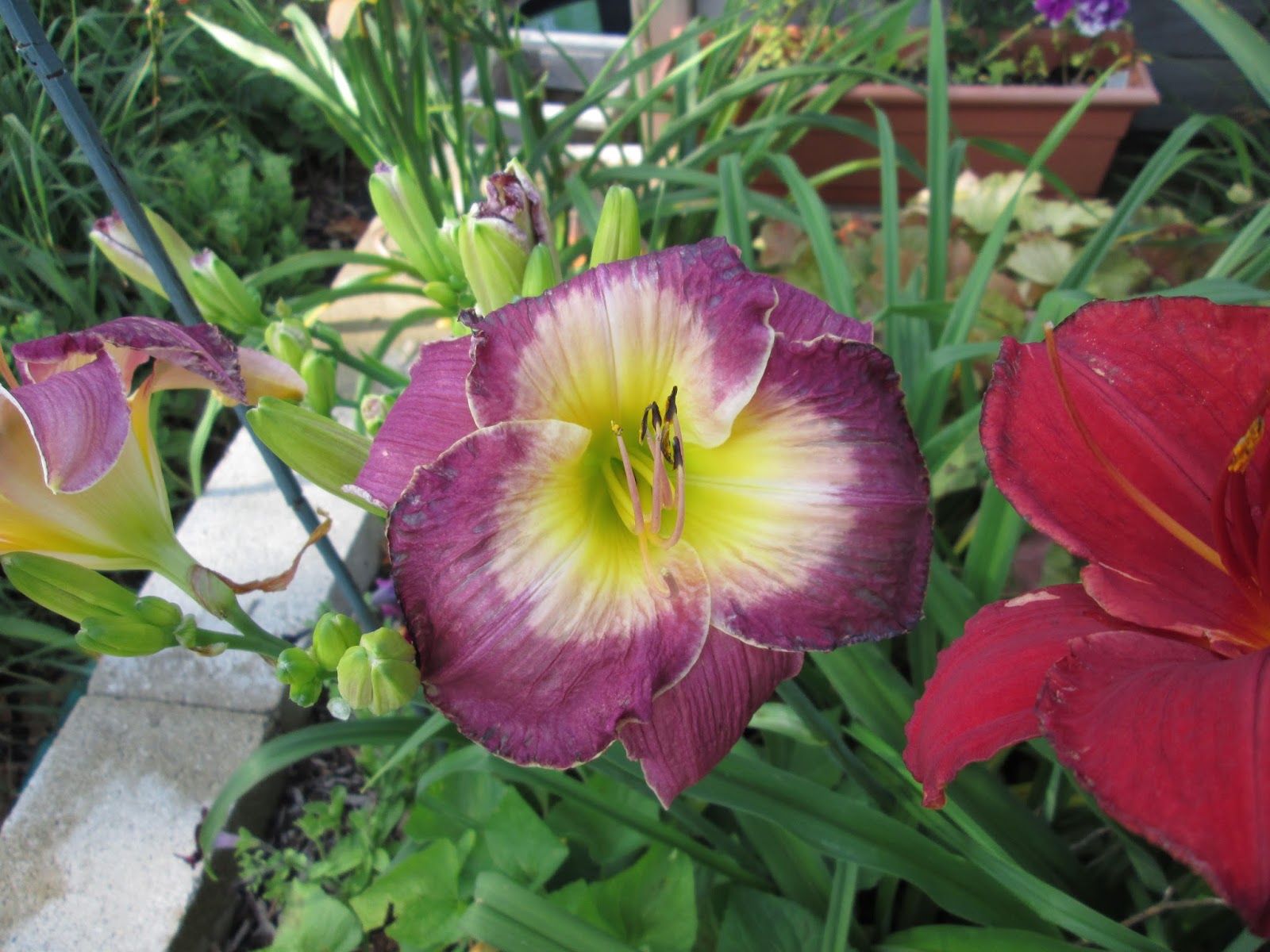
I like to stroll through Richard's garden several times during the summer. Two decades ago he set out to develop a daylily garden in his yard. There can never be too many daylilies, hence his entire yard, front, rear, sides, turned into a daylily display.
At the time he was building this, full of vim and vision, I doubt he ever realized that as an octogenarian he would have this much display to manage. And so far, he manages. But I hear him mutter on occasion that it is hard to keep up with it.
In any event, this is doubtless one of the premier gardens in the county!
Beauty even to the little bindweed that sneaked in under the foliage.
At the time he was building this, full of vim and vision, I doubt he ever realized that as an octogenarian he would have this much display to manage. And so far, he manages. But I hear him mutter on occasion that it is hard to keep up with it.
In any event, this is doubtless one of the premier gardens in the county!
Beauty even to the little bindweed that sneaked in under the foliage.
Saturday, June 21, 2014
Hemerocallis fulva
We have several stands of orange day lilies, the common roadside lily, or ditch lily as some call it. When I first came to Indiana in the 50s, one of life's little pleasures in June and July was to drive down the roads enjoying the massive displays of these flowers. They could be seen along berms, beside small streams, and even in some yards from time to time. Some roadside areas were populated with what many called cornflower, which was wild chicory, and Queen Anne's lace. These Delft-like displays of color often alternated with the vivid orange of the lilies.
I have a fondness for these flowers, whether aesthetically pleasing to my eye, or nostalgically pleasant to my mind. Most people consider these lilies to be weeds, even referring to them as "noxious weeds." Those people are seeing their apparent wishes to eradicate them come to pass, for with the growth of population, expansion of commerce and industry, increased need for more arable land, and especially the transformation of highways into freeways, and the upgrading of byways into highways, habitat for these flowers is shrinking rapidly.
The Hemerocallis fulva, scientific name for these lilies, does indeed have an invasive habit, and thus might be viewed as a weed. (Weed: any plant that is where one does not want it.) Certainly one would be unwise to plant one, just one, of the tubers anywhere near hybrid daylilies, for in a matter of a very few seasons, there will be only orange lilies in that area. However, by dint of sufficient effort to dig away and corral the rascals in the desired location, they become lovely flowers.
The Midwest in my mind's eye, viewed on a leisurely drive along an eighteen-foot road, today exists only in the memories of those who experienced it long ago, or in the fertile imaginations of east coast city-dwellers who think that we still live in the stone age out here.
Reporting from Perfect, Indiana, this is your fly-over country correspondent, Buford Bumpkin.
I have a fondness for these flowers, whether aesthetically pleasing to my eye, or nostalgically pleasant to my mind. Most people consider these lilies to be weeds, even referring to them as "noxious weeds." Those people are seeing their apparent wishes to eradicate them come to pass, for with the growth of population, expansion of commerce and industry, increased need for more arable land, and especially the transformation of highways into freeways, and the upgrading of byways into highways, habitat for these flowers is shrinking rapidly.
The Hemerocallis fulva, scientific name for these lilies, does indeed have an invasive habit, and thus might be viewed as a weed. (Weed: any plant that is where one does not want it.) Certainly one would be unwise to plant one, just one, of the tubers anywhere near hybrid daylilies, for in a matter of a very few seasons, there will be only orange lilies in that area. However, by dint of sufficient effort to dig away and corral the rascals in the desired location, they become lovely flowers.
The Midwest in my mind's eye, viewed on a leisurely drive along an eighteen-foot road, today exists only in the memories of those who experienced it long ago, or in the fertile imaginations of east coast city-dwellers who think that we still live in the stone age out here.
Reporting from Perfect, Indiana, this is your fly-over country correspondent, Buford Bumpkin.
Subscribe to:
Posts (Atom)