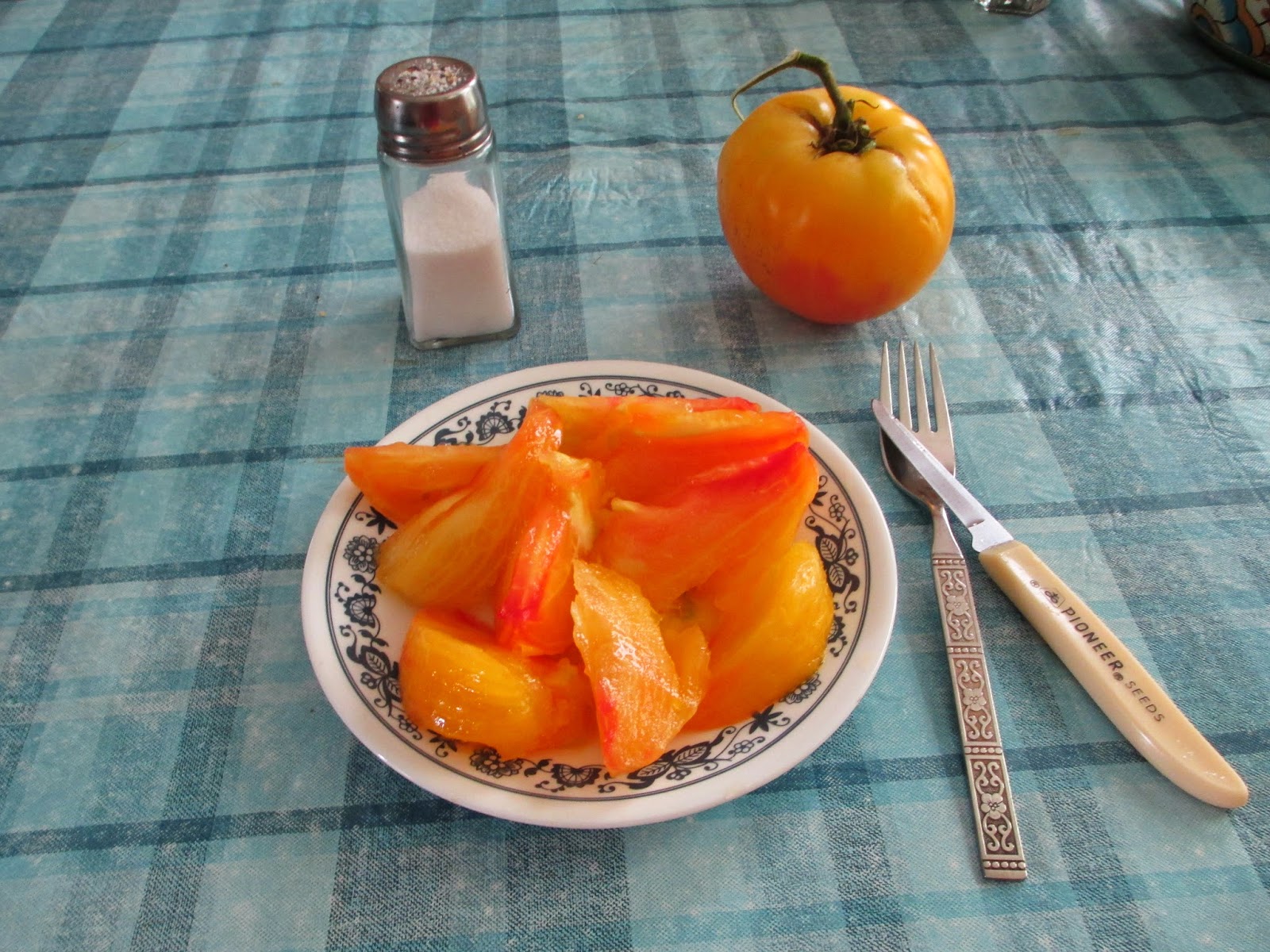
I posted this article a couple years ago under the title "Jurisprudence Trumps Science." The thing that motivated me to look it up and drag it forward was this. We finished the garden tomatoes at supper. Beautiful golden and red slicers, so tomatolicious.
Summer time gives me the opportunity on occasion to toss in this little tidbit for the edification of the auditors.
And 121 years later, it seems yet that suing the government is a zero-sum activity. The plaintiff is likely to get zero, and the cost to the defendant will likely be zero. The attys win, though.
Jurisprudence Trumps Science
On May 10, 1893, the Supreme Court of the United States upheld a lower
court decision and declared the tomato to be a vegetable, not a fruit.
Notwithstanding testimony to the contrary, and much reading from
dictionaries by both parties to the dispute, ultimately Justice Horace Gray
wrote the opinion for the court in which he essentially said that
notwithstanding that all botanical references did seem to support its status as
a fruit, because of its historical place on the dinner-table, eaten with
the main course, not as a dessert, the tomato is a vegetable.
Some background might shed some light on this astounding turn of events.
Under the Tariff Act of 1883, fruit were admitted duty free, whereas vegetables
were not. The plaintiff had been paying, under protest, tariff on tomatoes and
was therefore suing to recover said payments from the Collector of the Port of
New York and to require such collections to cease.
Does it take a genius to figure out what is about to go down? Merchant vs.
Government of the United States, essentially, though that is not the name of the
case. What duly appointed and honest justice is going to rule contrary to the
interpretation of the government? If the government says the tomato is a
vegetable, the tomato is a vegetable. Case closed.
Case is Nix vs. Hedden, 1893.
Image: The Kitchen Table