Wednesday, February 8, 2012

Wichita

We left Liberal and traveled to...
Better the tale move in a more direct line to Wichita, never mind the ramblings, twists and turns taken to get there.

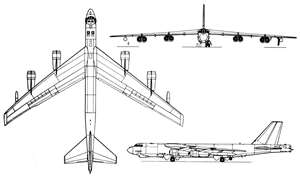
David and I found a place to live, which was basically a bedroom in a home, but with kitchen privileges. Then to find a job. Rent, we discover, is not free, in spite of the years of free rent the parents had given. We both immediately found employment at Boeing Airplane Company. On closer examination it becomes clear the reason employment was so readily available. At the time Boeing had contracts with the government to produce B-47s and B-52s. These contracts were on a “cost plus” basis, which is to say, that for every dollar it cost Boeing to train, employ, and pay us, they made an additional dime for themselves.

My first week with my new employer was spent at a training facility in downtown Wichita. I was learning to be a tool and die maker! At the end of the week, I was placed in the factory, second shift, as a “jig builder.” My basic tasks were to stay out of trouble, and stay out of the way.

Now the B-47 was being produced in Wichita, but not the B-52. I was placed on a team that was engaged in making tools and jigs for the soon-to-start building of the B-52.  We were building a tool to hold the outboard starboard engine in place during assembly. If memory serves me right, and I think it might, I tapped one hole in that jig during my tenure there. And in my haste, awkwardness, and ineptitude, I broke the tap and it took a machinist the rest of the shift to repair the damage.

For reasons that might be becoming entirely too clear, when fall approached, I chose to quit Boeing and enroll in college.

Tuesday, February 7, 2012

City Boy on the Farm #T

I had a newly minted diploma asserting that I had completed the requirements for graduation from my high school. I was not yet eighteen years of age, but I was now a man. (This is the sort of thing seventeen-year-old boys are prone to believe.) Thus it was that I packed a tin suitcase with a few items of clothing and hit the road. A one-day stint in Colby, Kansas erecting grain silos, heat in excess of one hundred degrees, was sufficient to convince me that there had to be a better way to earn a livelihood.

So we headed south and wound up in Liberal, Kansas, near the border of the Oklahoma panhandle. I secured employment as a truck driver for the wheat harvest on a small farm comprised of a section of land. Eighty acres were in peas, eighty acres lay fallow, and the balance of the land was in wheat. The farm was twenty-two miles from the elevator in Liberal. Mrs. Rohrer left her home in town for the duration of the harvest and stayed in the farmhouse to prepare meals for the hands. And a worthy cook she was, too. Wonderful eating and too tired at the end of the day to get into any mischief.

One day’s work made a real impression upon my young, impressionable mind. Shortly after lunch my truck was full and I was ready to head into town. Mr. Rohrer climbed off the combine and came over to me. He gave me the key to his house in town and told me to pick up a certain item there after I dumped the wheat at the elevator. Of course there was a line of trucks waiting to unload and I had to wait my turn. Then I headed to the house, found the desired item, locked up and drove the twenty-two miles back to the field.

What greeted me as I drove into the field was a combine-hopper full of wheat lying in a pile on the ground. I situated the truck for the combine to dump in the truck, and when Mr. R unloaded, he advised me that after the day’s cutting was done, I could bring the truck back to the field and scoop the wheat in by hand. And I did.

One day it was raining and thus there was no harvesting going on. So we hands were given instructions on cleaning up the barn-lot, cutting weeds and generally spiffing up around the place.

When harvest was over, we were set to disc the land, two of us running a tractor twenty-four hours. The only instructions I was given were 1) keep that front wheel in the rut from the previous pass, and 2) don’t hit that drip pipe on the gas-line at the south end of the home field. Of course I got yelled at for failure to obey rule 1) and naturally I hit the drip pipe with the outboard wheel on the disc.

So I packed my suitcase and headed for Wichita. And when Mr. R paid me, I was advised that, yes, truck-driving pays $10 a day, but working in the barn lot and driving tractor pays only $7.50. And that’s what I got.

Monday, February 6, 2012

A Dozen Years in Paradise


Twelve years ago today I met BBBH at the altar where we said our marriage vows. We were united in matrimony, and nothing has been the same since.

I am sure I repeat myself, but I’m not going to search the archives to verify that. A man (that would be me) looks at a woman and thinks, “That’s exactly what I want!” A woman (BBBH in this case) looks at a man and thinks, “He has potential.” Then she changes, and he doesn’t.

That’s a joke, of course. The truth is that both parties change, and neither party becomes perfect. But love is more patience than it is dewy-eyed wonder, and at our age, we should have known that whether we did or not.

Stopping, I hope before I dig in so deep I can’t get out, I can only say, We still love each other after twelve years of both patience and awe. I love you, JoAnn!

Sunday, February 5, 2012

Bright Beginning, Sad Ending

One of the saddest and most heart-rending stories in the Bible is told in the First Book of Samuel. Saul, son of Kish, we are told, was “a choice young man, and handsome, and there was not among the children of Israel a more handsome person than he; ...he was taller than any of the people.” Samuel told Saul, “The Spirit of the Lord will come upon you and you shall prophesy with [the prophets] and shall be turned into another man... And it was so that... God gave him another heart.” Thus was he anointed the first king of Israel. (10:6,9,24)

What, you might ask, is sad about that? Nothing, certainly. And the Book continues with the story of Saul’s reign, the good the bad and the ugly. But then in chapter 31 we read, “Therefore Saul took a sword, and fell upon it. And when his armor-bearer saw that Saul was dead, he fell likewise upon his sword, and died with him.” (31:4,5)

A man chosen and blessed of God, elevated to the highest position in the land, given a new heart; and yet for his failure to follow God in all things, he died a suicide. What lesson can we take from this? If nothing else, be careful in all things to honor God and follow His leadings.

Saturday, February 4, 2012

My Little Sister Writes

Here is a recent story for you. This is the background. A couple of Sunday's ago I talked to a 90 year old lady at church. She told me that she was an artist in Greenwich Village NYC for many years. She made fused glass art and sold it at over 100 stores in the city. When I told her I was in the arts as well, a bond was struck, and she told me I could call her Jan (name Janet) because that is the name she went by when she was a working artist. She said that she did not think Janet to be an artsy name. We proceeded downstairs to the fellowship hall, with her using what she called "TDC" (translation-that damn cane). When we arrived at the basement, she asked if I wanted to hear a joke....And now for the heart of the story...

She glanced around the fellowship hall with a mischievous twinkle in her eye and asked me if I thought it would be ok for her to tell the joke in there. Curiosity and a bit of good natured devilishness got the best of me, and I told her that we weren't in the sanctuary anymore, and that it would be ok. And so she told me this joke.

Walter, a man who had just turned 89 met his friend, Floyd, at a restaurant in a fancy New York hotel. After dinner, Floyd told Walter that he'd brought him a birthday present but had left it in his room on the 4th floor.
"You will have to go up to room 402 to get it," Floyd told him, "Here is my key."
When Walter arrived at the elevator, he discovered it was out of order, and so he proceeded to walk up. With each flight of stairs he became more and more winded, and by the time he reached the 4th floor, he was out of breath. He unlocked the door and was greeted by a voluptuous blond.
"I am your birthday present," she said, "and I am supposed to give you super sex."
He pondered her proposal while he struggled to get his breath. Finally he was able to speak.
"Thank you, he said, I think I will have the soup." --E. I. Carter

Friday, February 3, 2012

Rabbit Hunting, 1945

Several of the old fellows sitting on the patio got onto the subject of hunting. Somehow rabbits hopped into the discussion. Most of the talk had to do with edibility of rabbit in general, and certain ones in particular. I drifted off into my own world, which is to say I found myself transported back more than sixty-five years, and in a locale 1000 miles away.

When I was a sixth-grader, my best buddy, also a sixth-grader found himself removed from town some forty-five miles and living on the high plains with his mother. Wes’s mom had taken a school in a Czech community farther away in culture and lifestyle than it was in distance from their home. Understand that this was a one-room school. However, the building itself had a second room which was outfitted as living quarters for the teacher, who in addition to teaching responsibilities for thirty-five students spread over eight grades, was also the janitor upon whom devolved the responsibility of keeping the premises heated with the wood-burning equipment. She decided she needed her son to live with her during this school year.

And so it was that I was invited to visit them during a break in the school activities which was occasioned by a community cultural festival. I could not believe sitting at table with people who were so bountifully blessed that they could serve more than one meat at a meal. Three, in fact: poultry, beef and lamb.
.
But back to the rabbit. The day before I was to head back to the city and home, Wes and I went rabbit hunting. Now understand that “rabbit” in this locale pretty much means “jackrabbit.” With the exception of one shot, the day was quite void of opportunity to shoot game. I was carrying a single shot .22 rifle. As we scuffed along through the yucca flat, a rabbit jumped up and headed straight away from me, except of course for the bobbing from side to side as it ran. I pulled down on it and fired when it was probably twenty yards ahead. The rabbit dropped instantly. Examination of the carcass revealed no blood, no wounds; but a careful study revealed that the bullet had struck the animal in the back of the neck, breaking it cleanly as it ricocheted off without puncturing the skin! What a shot! What a lucky, improbable, and never-to-be-repeated shot.

Yet there is more to the story, for Wes and I took our trophy home, cleaned it, cooked it, and ate it, because the parents hadn’t the heart to tell us eating jackrabbit just wasn’t done.

Thursday, February 2, 2012

For the Birds

Saturday evening is “hamburgers.” This simply means that about 200 of the park residents gather in the social hall at 5:30 to eat hamburgers cooked on the outside grill, along with shredded lettuce, which, if you take a bottle of salad dressing, you can pile on your plate and call it “salad.” After burgers, at extra cost, one may get ice cream! Also, most Saturdays have “entertainment” after, so it is an exciting night out for oldsters such as ourselves. (That’s all background; so here’s the story.)

Seated next to us at our table were three “bachelor” types, that is, fellows whose wives had succumbed to death and who have not yet been tagged by a widow-lady. The gentleman sitting next to me was a very pleasant but unassuming individual whom I finally engaged in conversation. He is from Missouri, and lives at the end of our block. He told me of his early years when he worked in Connecticut, but, he said, he wanted to pursue “further” graduate work, so he returned to Missouri where he took his PhD at University of Missouri. I told him my sister had taken her PhD at Missouri and the conversation turned to areas of expertise. I asked what his field was and he replied, “poultry nutrition.” So now I fancy that I know a fellow who knows more about chicken feed than I do, notwithstanding that I raised a family on a paycheck that amounted to about that.

I have long believed that academia narrows fields of expertise to a fine point, and here is an excellent illustration of that fact. Someday, some university is going to narrow a study down to a vanishing-point, and the recipients of the degree offered will know everything about nothing!

Wednesday, February 1, 2012

Small Town America

(Small towns and villages across America fascinate me. I have lived in a few of them, and I have visited many others. They all possess some characteristics in common, not the least of which seems to be a fierce sense of belonging, of possession, if you will. This snippet is one in the “Loonville” series which I posted on String Too Short to Tie two years ago. It relates the beginning of my awareness of the special nature of small and closed communities, way back in my much younger day.)
The Carnegie Library was built tall, literally, I believe, to tower over the smallness of the town. One ascended to the heights via a most impressive exterior stairway; but the rewards to be garnered therein were certainly worth the climb. This was the highpoint of life in Loonville.

Since one had to make his or her own entertainment in this village, the library was a godsend to those who could read. No, don't talk to me about videotapes, music CDs and other such johnny-come-drive-the-books-off-the-shelves that have afflicted modern "libraries." Yes, and computer rooms and electronic card catalogs and how many other ways have we lost something once precious?*

In addition to the books and magazines, this little haven of intellectual challenge had a collection of newspapers. No, not microfiche or microfilm or digitized data. It had local newspapers going back to 1868. This little place-too-small-to-make-a-dot-on-the-map actually had a newspaper in the nineteenth century. No more, of course, even at the time this tale reflects.

It was in this town and partly with the help of this collection that I developed a sense of the meaning of "roots." I had been raised in a minister's home, and we had moved eight times by the time I left home and had lived in five different towns. Imagine the sense of wonder that crept slowly into my awareness when I would talk with an individual in the local drugstore or at the post office, then read that person's name in a newspaper from 1879 a few days later. Not just the family name, either, but the whole name just as it is carried by my acquaintance today. I would read, for instance "Jim Griggs transported eight head of hog to the railhead Saturday." And now in the middle of the next century, Jim Griggs is proprietor of the biggest hog operation in the southern half of the county. "Marcus Wright traveled to Muncie this past week for the funeral of his brother, Frederick Wright, late of that community." Marcus Wright is the fifth grade teacher in the local elementary school today.

I could cite many other examples, but this will serve to help you understand how I came to an appreciation of people's "rootedness", how those who are attached to the land develop a sense of belonging and right of possession. It is small wonder that newcomers to rural communities and small towns are viewed with suspicion and have such difficulty establishing themselves, having to prove themselves on a daily basis.
© 2010 David W. Lacy

*It occurred to me as I was preparing this for re-posting that one could infer that I am indeed a troglodyte, one who, if he reads at all, would be perusing stone or clay tablets. Things change. But old people don’t “move with the times” as readily, perhaps, as do the younger ones among us.